 Professional
 Clean
Clean
 Fast
Fast
While it’s not as common these days a gas burning furnace, a boiler is still one very viable alternative keeping your home warm and comfortable. But how does it work, and what does it do in your home? Let’s go over the facts!
How Does A Boiler Work?
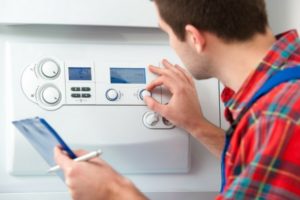 A boiler works by heating up water, either using gas or electricity to do this, and then sends that water throughout the home.
The water travels through pipes and is circulated into every room. This heated water then warms the air in a room, rather than a gas furnace which heats air, then pumps that hot air throughout a home.

Does A Boiler Boil?
In truth, the answer to this question is, “not anymore.” However, the technology and principles are the same, even if the final results no longer are.
In the past, boilers actually did boil water into steam, sometimes for specific industrial purposes. Today, however, the average boiler only needs to heat up water to about 140° in order to effectively heat a home.
Do Boilers Make My House Humid?
 The answer to this is, “only if it’s not working properly.” Older cast iron boilers require air to burn, which they draw from the home itself, making things very dry in a home!
On the other hand, modern, high-efficiency boilers have no impact on the humidity in the air, meaning there’s no impact on air quality.
If your boiler system is faulty, water may be escaping, which can add humidity to the air, but that’s not a benefit, that’s a problem!

And Water Pressure?
With a boiler it does! In the same way that some people can’t enjoy a good shower without high water pressure, you can’t enjoy proper heating with a boiler without it.
Low water pressure means that water isn’t circulating into the rooms as efficiently as it should. In some cases, low water pressure may even mean that water is leaking. Good, constant pressure is a sign of efficient boiler operation, so it’s important to keep this up.
Cost Effectiveness

Of course, one of the big concerns people have with new equipment is whether this will truly save them money in the end.
Practically speaking, any upgrade from older heating hardware to newer, high-efficiency hardware will be expensive upfront, but result in lower bills. The longer you live in your home, the more you save!
How Efficient Is A Boiler?
 Boiler systems can be about 90% efficient, which is slightly less efficient than gas burning furnaces which can go up to about 95%. However, one way that boilers are very efficient is that you control temperatures from room to room! This means that instead of paying to have the whole house heated to the same temperature, you can keep other rooms cooler, while only keeping the bedroom warm when you sleep at night.
Staying comfortable in both summer and winter can be a real challenge sometimes. Fortunately, we have efficient, modern environmental systems in place like the latest, high-efficiency boilers. And as long as they do their job, we can remain comfortable no matter how cold it gets.