Schedule Service

We've All Been There

You’ve been thinking about this for a while now, haven’t you? 

The air conditioner is 15 years old. The furnace is probably closer to 17. Every time a technician takes a look, you catch that familiar pause, the one that silently says, “These are living on borrowed time.” 

You already know what the answer is. 
You’ve done the research. 
You’ve gotten quotes. 
You’ve run the numbers more times than you’d like to admit. 

It’s not that you can’t replace your HVAC system. Financing exists. Options exist. 
What’s been missing is permission, a reason that makes this feel responsible instead of impulsive. 

That’s exactly why Cardinal created the Two-Fur Deal. 

Why Replacing Your AC and Furnace Now Is the Smart Choice for Homeowners

In Wisconsin, HVAC systems don’t get an easy life. Long winters, humid summers, and constant temperature swings take a toll, especially once equipment passes the 10 to 15 year mark. 

When both your air conditioner and furnace are aging, waiting often means dealing with declining performance and increasing uncertainty. Here’s why replacing them now makes sense: 

Lower Energy Consumption 
Modern HVAC systems are designed to use less energy than older equipment. From day one, a new matched system operates more efficiently and delivers more reliable performance. 

Avoid Mid-Season Breakdowns 
No one wants to replace a furnace in January or an AC in July. Upgrading on your timeline means fewer emergency situations, clearer planning, and a more comfortable home year-round. 

Better Long-Term Performance 
When both systems are replaced together, they are properly matched by efficiency ratings and design. That allows the system to operate as intended instead of compensating for outdated components. 

More Consistent Comfort 
Matched systems provide better airflow, improved humidity control, and more even temperatures throughout the home, something older or mismatched equipment often struggles to deliver. 

What Is Cardinal’s Two-Fur Deal? (Free Furnace with AC Replacement)
The Two-Fur Deal is Cardinal’s biggest HVAC promotion of the year, designed for homeowners who have been waiting for the right moment to replace aging equipment. 

Here’s how it works: 

When you purchase a qualifying high-efficiency air conditioner, you receive a high-efficiency furnace completely free, a value worth thousands of dollars. 

If you schedule your installation and pay your deposit by February 28you’ll also receive a $1,000 Whole-Home Air Purification System at no additional cost. 

This isn’t a small add-on. It’s a professional-grade ionizer that integrates with your HVAC system to continuously clean the air in every room of your home. Reduces airborne particles, neutralizes odors, and helps protect your family from contaminants circulating through your ductwork. 

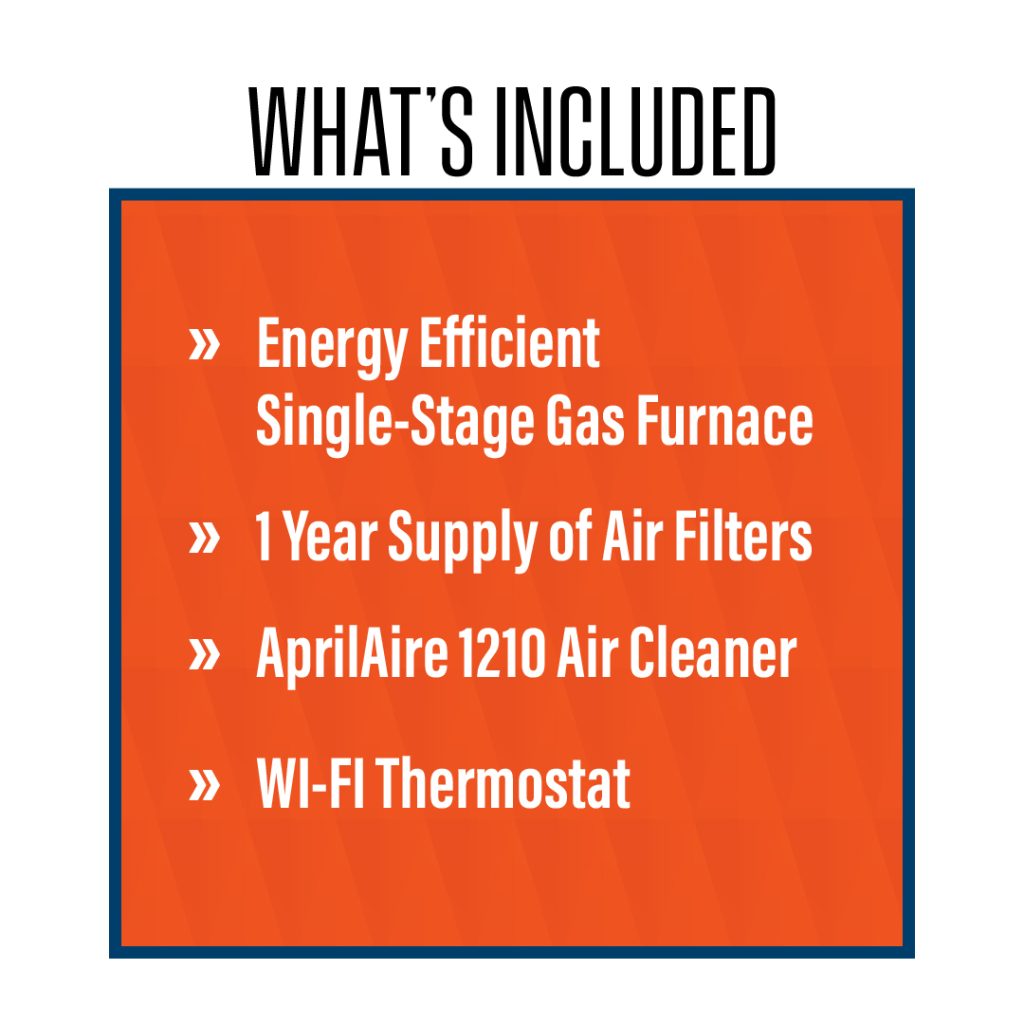
What’s Included in the Two-Fur Package: 

  • High-efficiency air conditioning system 
  • High-efficiency furnace (FREE) 
  • $1,000 Whole-Home Air Purification System(Early Bird bonus, Book Before Feb. 28, 2026) 
  • 1-year supply of filters 
  • Programmable thermostat 
  • AprilAire 1210 Air Cleaner 


Total value includes major equipment and system enhancements designed to improve comfort, performance, and air quality throughout your home. 

 Curious if your home would benefit from the Two-Fur Deal? 

Schedule a free, no-pressure estimate with a Cardinal comfort advisor and get clear answers tailored to your home. 

Should You Replace Your Furnace and Air Conditioner at the Same Time?

Many homeowners wonder if it’s better to replace one system now and wait on the other. In most cases, replacing both together delivers better overall results. 

Better System Compatibility 
A new air conditioner paired with an older furnace can create efficiency and performance issues. A matched system is designed to work together seamlessly. 

Simplified Installation Process 
Replacing both systems at once allows the installation to be completed in a single visit, with equipment designed to operate together from the start. 

Reduced Wear and Tear 
When both systems share similar technology and efficiency ratings, they experience less operational strain. That supports longer system life and more consistent performance. 

Increased Home Appeal 
A complete, newly installed HVAC system is reassuring for future buyers, especially in climates where heating and cooling reliability matter. 

How Does Financing Work for AC and Furnace Replacement?

Replacing an HVAC system is a major home decision, and homeowners deserve clarity rather than pressure. 

Cardinal offers flexible financing options designed to make system replacement manageable and predictable. During your free estimate, we’ll explain available plans, timelines, and system options so you can make an informed decision with confidence. 

With the Two-Fur Deal, homeowners can focus on upgrading their comfort and equipment without having to coordinate separate projects at different times. 

Best Time to Replace Your HVAC System in Wisconsin (Why Spring Matters)

The Two-Fur promotion runs from February 1 through March 31, and that timing is intentional. 

Spring is one of the best times for HVAC replacement in Dane County: 

  • Installation schedules are more flexible 
  • Equipment is installed before extreme weather arrives 
  • Homeowners can plan proactively rather than react to breakdowns 

Important deadlines to know: 

  • February 28: Early Bird bonus, free $1,000 Whole-Home Air Purification System 
  • March 31: Two-Fur promotion ends 

After that, the free furnace offer is no longer available. 

AC and Furnace Replacement FAQs (Two-Fur Deal Questions Answered)

Do I really get a free furnace with this promotion? 
Yes. When you purchase a qualifying air conditioner, the high-efficiency furnace is included at no additional cost as part of the Two-Fur Deal. 

What qualifies as a “qualifying” air conditioner? 
Our team will walk you through eligible high-efficiency systems during your free estimate and help you select the right option for your home. 

What does the Whole-Home Air Purification System do? 
It integrates with your HVAC system to help reduce airborne contaminants, allergens, and odors throughout your entire home. 

Are financing options available? 
Yes. Flexible financing plans are available and will be reviewed during your consultation. 

Why does the Early Bird bonus end February 28? 
Early scheduling helps ensure efficient planning and allows us to reserve installation times for homeowners who act sooner. 

You’ve Been Smart to Wait. Now It’s Time to Act. 

This isn’t about pressure. 
It’s about permission. 

You weren’t procrastinating. You were being thoughtful and strategic, waiting for a deal that truly made sense. 

The Two-Fur Deal is that opportunity. 

One decision. 
Both systems. 
Everything included. 
Finally off your mental to-do list. 

Ready to check this off for good? 

Schedule your free estimate today and see if the Two-Fur Deal is right for your home.

Schedule Service

Why Wisconsin Homes Feel So Dry in Winter (And How a Whole-Home Humidifier Fixes It)

You know that feeling when you wake up in January and your throat feels like sandpaper? When you’ve applied lotion three times today and your hands still feel tight? When you look in the mirror and see someone who looks as exhausted as they feel? 

It’s not you. It’s January in Wisconsin. And the real culprit has been hiding in plain sight: the air inside your own home. 

The Invisible Thief

Your forced-air heating system keeps you warm, but it’s also pulling moisture out of everything. Your skin. Your hair. Your sinuses. The air itself. By January, the cumulative effect is impossible to ignore. 

That scratchy throat when you wake up. Those 2am nosebleeds. The static shock every time you touch a doorknob. The way you go through chapstick like water. They’re all connected. 

You haven’t changed your skincare routine or your lifestyle. But suddenly, everything feels harder. That’s dry winter air stealing your comfort, one day at a time. 

Why Your Solutions Aren't Working

You bought the expensive lotion. The hydrating hair mask. Those bedroom humidifiers you’re refilling constantly. You’re doing everything right. 

But those solutions treat symptoms, not the cause. A bedroom humidifier helps one room for a few hours. The lotion helps for an hour until dry air pulls that moisture right back out. You’re fighting a battle you can’t win. 

Your home should restore you, not drain you. 

What Dry Air Actually Does

Forced-air heating without humidification is like running a giant hair dryer through your house 24/7. Here’s what happens: 

Your skin feels tight because moisture is pulled from the surface faster than your body can replace it. No lotion can keep up. 

Your hair looks dull because the cuticle layer dries out and roughens. It’s not your products. It’s the air. 

Your kids get nosebleeds because delicate blood vessels become fragile when dried out. Those 2am wake-ups are preventable. 

Static shocks drive you crazy because dry air is a terrible conductor. Every doorknob becomes shocking. Literally. 

It’s not ten separate problems. It’s one problem showing up in ten different ways. 

Is a whole-home humidifier worth it in Wisconsin?

Yes. Wisconsin winters regularly drive indoor humidity below 20%, which causes dry skin, static electricity, nosebleeds, and discomfort. A whole-home humidifier maintains a healthy 30–40% humidity level automatically, making homes more comfortable and protecting both people and materials. 

The One Fix That Changes Everything

A whole-home humidifier connects directly to your heating system and water supply. Installed once. Done. It maintains consistent humidity throughout your entire home, automatically. 

No more refilling portable units. No more treating symptoms separately. Just comfortable air in every room, all season long.  

Cardinal has helped thousands of Dane County homeowners stay comfortable through brutal Wisconsin winters. Curious if a whole-home humidifier makes sense for your house? A quick consultation can give you a clear answer. 

What actually changes:

Your skin feels comfortable again. Your hair has its shine back. Your family sleeps through the night without nosebleeds. The static shocks stop. Your home becomes the refuge it’s supposed to be. 

The Real Cost

A whole-home humidifier typically ranges from $1,500 to $3,000 depending on your system. Through January 31st, we’re offering $150 off installation. 

But consider what you’re already spending on lotions, chapstick, and bedroom humidifiers just to get through winter. Plus the wear on your wood floors and furniture. Plus the interrupted sleep and discomfort. 

Properly humidified air also feels warmer at lower temperatures, so your heating system doesn’t work as hard. Many homeowners drop their thermostat 2-3 degrees and still feel more comfortable. 

This isn’t indulgence. This is infrastructure. It’s getting back what winter has been stealing from you. 

You Deserve to Feel Good in Your Own Home

January in Wisconsin is hard enough. Your home should be your refuge, not another thing draining you. 

You’re not vain for wanting your skin and hair to look healthy. You’re not overreacting to scratchy throats or your kids’ nosebleeds. These problems are real, uncomfortable, and fixable with one smart decision. 

Other Wisconsin homeowners made the call. They’re comfortable now. They’re wondering why they waited. 

Don’t let January end without getting back what winter stole from you. 

Ready to Get Back What Winter Stole? 

Schedule your free consultation with Cardinal. We’ll assess your home, answer your questions, and show you exactly how whole-home humidification works in your specific space. 

Schedule Service

The 4 Hidden Things Most Homeowners Miss.... and why you're different

You have a running list in your head. 

Furnace. Gutters. That weird noise the water heater makes. The filter that’s probably overdue. The crack in the basement wall you noticed last spring. The smoke detector that chirped once at 3 AM two weeks ago and hasn’t done it since—but you’re still listening for it. 

Nobody asked you to track these things. Nobody thanks you for remembering. But if you didn’t? Everyone would notice. 

This is the invisible mental load of keeping a home running. And if you’re reading this in early December while everyone else is focused on holiday shopping and party planning, you’re probably wondering which of those things actually needs attention before winter really hits. 

Let’s talk about the furnace specifically—because unlike the gutters or that mystery chirp, this one has a deadline attached to it. 

The Things You Can't See (And Why That Matters)

Here’s the uncomfortable truth about furnace failures: Most of them give you zero warning. 

You’re listening for sounds. You’re paying attention. You’re being responsible. And none of that will tell you when the capacitor is about to fail, when the heat exchanger has developed a hairline crack, or when the flame sensor has just enough buildup to work today but not tomorrow. 

The stuff that takes your furnace down in the middle of January? It’s happening silently right now. 

Capacitorsare the #1 failure point in furnaces, and they give almost no warning before they quit. They’rethe electrical componentthat helps your blower motor start up. When they fail, your furnace just… stops. No heat. No warning. They can test perfectly fine one day and be completely dead the next. A technician can test them with a multimeter and tell you “thisis at 65% of its rated capacity—it’s going to fail, probably this winter.” Without that multimeter? No way to know. 

Heat exchangersdevelop cracks over time from the repeated heating and cooling cycles. Tiny cracks. Micro-fractures you absolutely cannot see without taking the furnace apart. These cracks let combustion gases—including carbon monoxide—mix with the air that goes into your house. Your furnace will run fine. You won’thear anything wrong. This is why the heat exchanger inspection is the most important part of any tune-up. 

Flame sensorsget a coating of residue over time that prevents them from detecting the flame properly. Your furnace will start, fail tosense the flame, and shut down as a safety measure. This happens at 6 AM when it’s5°F outsideand you just want to get your kids ready for school. 

Gas pressurecan drift over time—usually slowly enough that you don’tnotice the furnace running a little less efficiently. Too much pressure damages components and creates safety risks. Too little pressure means you’repaying to run a furnace that’snot heating efficiently. Either way, there’sno way to tell without the right measurement tools. 

The point isn’t to scare you. The point is this: “Keeping an eye on it” has real limits. 

You can listen. You can watch for performance changes. You can be as attentive as humanly possible. But the components that fail most often do it invisibly, and the only way to catch them early is with the right tools and expertise. 

That’s what makes December different from January. In December, you’re looking. In January, you’re reacting. 

Why December Is Actually Different (Besides Availability)

Everyone talks about how HVAC companies are less busy in winter, which is true. But there’s a more important reason December matters for your furnace specifically. 

Right now, your furnace is warmed up but not stressed. 

Think about it: You’ve been running heat since October. The system’s been through its startup phase. Any immediate failures already happened. But you haven’t hit the deep cold yet—those stretches where the furnace runs almost continuously for days. 

This is your diagnostic sweet spot. 

A technician can run your system through its full cycle without making your house uncomfortable. They can watch it operate under normal conditions. They can catch the early warnings—the “this will be a problem in six weeks” stuff that’s impossible to see during an emergency call in January when they’re just trying to get your heat back. 

Plus, here’s something most people don’t think about: Your furnace works harder in January than in December. Not just longer hours—actual harder work. When it’s -10°F outside versus 25°F, your furnace has to make up a much bigger temperature difference. That extra stress exposes weak points. 

Finding out you have a failing blower motor capacitor in December means you schedule a repair. Finding out in January means you’re sleeping in your living room with a space heater while you wait three days for an available tech. 

What Actually Happens During a Professional Tune-Up

Let’s demystify this, because “inspection” is vague and it’s hard to know what you’re actually getting. 

A real furnace tune-up isn’t just someone looking at your furnace and saying “yep, looks good.” Here’s what actually happens: 

The stuff that keeps you safe: 

  • Heat exchanger inspection for cracks (this is the carbon monoxide concern—cracks let combustion gases into your air supply) 
  • Gas pressure testing (too high can damage components, too low means inefficient heating) 
  • Flame sensor and ignition system check (dirty sensors cause those startup delays you’ve been hearing) 
  • Carbon monoxide testing in your living space 
  • All safety switches verified 

The stuff that prevents midnight breakdowns: 

  • Blower motor amp draw tested (tells you if the motor’s working too hard and about to fail) 
  • Capacitor tested with a meter, not just visually (capacitors are the #1 failure point) 
  • All electrical connections checked and tightened 
  • Thermostat calibration verified (yes, thermostats lie) 
  • Condensate drain cleaned (frozen drains trigger emergency shutdowns) 

The stuff that saves you money: 

  • Burners cleaned (dirty burners waste gas and create soot) 
  • Air filter checked (running a clogged filter costs you roughly 15% more on your heating bill) 
  • Airflow measured (restricted airflow makes your furnace work harder and die younger) 

The technician should also tell you what they found. Not just “everything’s fine” but actual information: “Your heat exchanger looks good, your ignition system is strong, but your capacitor is testing at the low end of acceptable range—keep an eye on it, you’ll probably need to replace it next season.” 

That’s useful information. That goes on your mental list with actual context instead of just ambient worry. 

DIY vs. When to Call the Pros

Here’swhat you can and should do yourself: 

Check your air filter.Right now. I’ll wait. 

If it’s grey or you can’t see light through it, replace it. This alone solves about 30% of “my furnace isn’t working right” calls. A clogged filter makes your blower motor work harder, restricts airflow, can cause overheating shutdowns, and costs you money. Filters are cheap. New blower motors are expensive. 

Look at your thermostat. 

Is it level? Is it in direct sunlight? Is it neara heat source like a lamp? All of these things affect accuracy.If your thermostat thinks it’s72° but your living room is 68°, that’sa four-degree comfort problem that has nothing to do with your furnace. 

Listen to your furnacewhile itrunsa complete cycle.

Stand near it. Does it ignite smoothly? Does the blower kick onwithin a minute? Does it run steadily? Does it shut down cleanly? You’renot diagnosing problems here—you’reestablishinga baseline. When something changes, you’ll actually know what changed. 

Clear the area around your furnace.

Seriously, take five minutes and move the holiday decorations, paint cans, and storedstuff away from it. Furnaces need airflow. Also, if something does go wrong, you want clear access. 

Here’s what you shouldn’t DIY: 

Anything involving gas lines, electrical components, or the inside of the furnace cabinet. The money you save is not worth the risk of gas leaks, electrical fires, or inadvertently breaking something that’ll cost three times as much to fix. 

“YouTube University” has limits. Professional HVAC techs have diagnostic tools—manometers for gas pressure, multimeters for electrical testing, combustion analyzers for efficiency. They can tell the difference between “this is normal” and “this will fail in three weeks.” That kind of diagnostic precision just isn’t available without the right equipment, and that’s okay. 

The Real Cost-Benefit Math

Let’s be practical about this. 

A tune-up costs roughly $150-200. An emergency repair call in January starts at $300-400 before they even diagnose the problem. A full blower motor replacement runs $400-800. A heat exchanger? You’re looking at $1,500-2,500, and at that point, most people just replace the whole furnace. 

But here’s the more important math: What’s your time worth? 

Taking two hours off work in December to be home for a scheduled appointment versus taking a full day (or two) off in January when your furnace dies and you’re coordinating emergency repairs, maybe a hotel stay if it’s bitterly cold, definitely some family stress. 

What’s your peace of mind worth? The difference between “I know my furnace is solid” and “I’m listening to that sound every time it kicks on and googling ‘furnace noises’ at midnight.” 

We’re not trying to convince you either way. You know your situation. You know your furnace age, your risk tolerance, your budget, your stress capacity. 

But if you’re carrying it on your mental list—if you’re noticing sounds, if you’re wondering “will it make it,” if you’re reading articles like this one—you’ve already decided. You’re just looking for permission to spend the money and the validation that it’s the smart call. 

Consider this your permission: It’s the smart call.