Schedule Service

Most Wisconsin storms are just storms

Rain. Thunder. Maybe a flicker of lights. You have been through enough of them living in Sun Prairie or anywhere in Dane County. You know the routine. Light a candle. Wait it out. The power usually comes back within the hour. 

But not every storm goes that way. 

Sometimes the power stays out. 

And when it does, your sump pump goes silent. 

That is when the real problem begins. 

The Storm Is Not the Risk. The Power Outage Is.
In southern Wisconsin, the storms that knock out power are often the same ones that dump inches of rain in a short window. Spring snowmelt. Saturated ground. Heavy thunderstorms rolling across Dane County. 

Your sump pump is designed to handle rising groundwater, but it runs on electricity. So when the power fails at the exact moment your pump is needed most, it stops working. 

Not gradually. Immediately. Water does not wait. 

What Insurance Replaces and What It Does Not

If your basement floods, insurance may help with: 

  • Carpet 
  • Drywall 
  • Furniture 
  • Appliances 

It is a disruption. It is expensive. But it is replaceable. 

What usually lives in basements, though, is not. 

Photo albums. Baby books. Kids’ artwork from elementary school. Holiday decorations collected over decades. Old home videos on tapes or DVDs. Letters. Yearbooks. The box you keep meaning to sort through but never quite get around to. 

Water does not distinguish between soaked carpet and forty years of memories. It ruins both without hesitation. 

And when you are standing in a wet basement holding pages that used to contain photos of your child’s first steps, there is no claim form that fixes that. 

That is the part most homeowners do not think about until it happens. 

Why a Standard Sump Pump Is Not Enough

A typical sump pump system in Sun Prairie homes includes one primary pump connected to your home’s electrical system. 

It works perfectly. Until the power goes out. 

Without a battery backup sump pump, there is no secondary protection. No redundancy. No safety net. 

A battery backup system installs alongside your primary pump. When the power fails, it switches on automatically. You do not have to reset anything. You do not have to be home. 

It simply keeps running. 

That is the difference between cleanup and staying dry. 

What Battery Backup Sump Pump Installation Actually Protects

Staying protected during a power outage means: 

  • Your pump continues running even when the grid is down 
  • Your basement stays dry during heavy rain and spring thaw 
  • Your stored belongings stay exactly where you left them 
  • You avoid water damage costs that exceed insurance limits 
  • You stop worrying every time a severe thunderstorm warning appears 

That last one matters more than most people expect. 

There is a real cost to lying awake during a Wisconsin storm wondering whether tonight is the night something goes wrong. 

Common Questions About Battery Backup Sump Pumps

What is the difference between a battery backup sump pump and a regular sump pump? 

Your primary sump pump runs on household electricity. A battery backup sump pump has its own dedicated battery system. If the power fails, the backup automatically takes over. The systems we install combine both into one coordinated setup so your home is protected under normal conditions and during outages. 

How long does a battery backup sump pump last during an outage? 

Runtime depends on how much water is entering your sump pit. Most systems are designed to handle extended outages common during Wisconsin storms, not just brief power flickers. During an in-home estimate, we can review capacity options based on your home’s specific needs. 

How do I know if the battery needs attention? 

Modern systems include built-in monitoring and alarms. They perform regular self-checks and alert you if the battery needs replacement. You are not left guessing. 

How long does installation take? 

In most Sun Prairie and Dane County homes, installation can be completed in a few hours. After assessing your existing sump setup, your plumber will provide a clear timeline. 

How much does battery backup sump pump installation cost? 

Installation cost depends on your current sump configuration and the battery system selected. Through April 3, 2026, you will save 100 dollars off installation. Call us for a precise quote tailored to your home. 

Save 100 Dollars on Battery Backup Sump Pump Installation Before April 3

Storm season in Wisconsin is not the time to discover you needed backup protection. 

Through April 3, 2026, Cardinal is offering 100 dollars off battery backup sump pump installation for homeowners in Sun Prairie and throughout Dane County. 

We have served this community since 1984. Our licensed plumbers install systems designed for real Midwest weather conditions. We evaluate your current sump pump, recommend the right backup capacity, and ensure the system is installed properly the first time. 

This is one of those upgrades where the math is straightforward. 

One installation. 

One battery backup system. 

And you stop gambling with things that cannot be replaced. 

If you have been meaning to get this taken care of, now is the time to schedule it before the next round of storms rolls through. 

Call (608) 291-3409or click the button below to schedule your battery backup sump pump installation and secure your 100 dollar savings before April 3. 

Schedule Service

What's With the Water?

You’ve probably noticed it. That slightly metallic taste when you fill a glass from the tap. Or the faint chlorine smell when you’re washing vegetables. Nothing dramatic, just… there. 

So you started buying bottled water. A case here, a case there. It seemed like the reasonable solution. But now the cases are stacking up in the garage, you’re spending $50 to $100 every month, and there’s a persistent voice in your head asking if there’s a better way. 

There is. And it’s probably simpler than you think. 

What Reverse Osmosis Actually Does


A reverse osmosis system (usually shortened to “RO system”) does something straightforward: it filters your tap water to the same purity level as bottled water. 

The process uses a semi-permeable membrane that catches the things you can taste and smell (chlorine, minerals, sediment) while letting the water molecules pass through. The result is water that tastes clean, without any of the off-flavors that made you reach for bottles in the first place. 

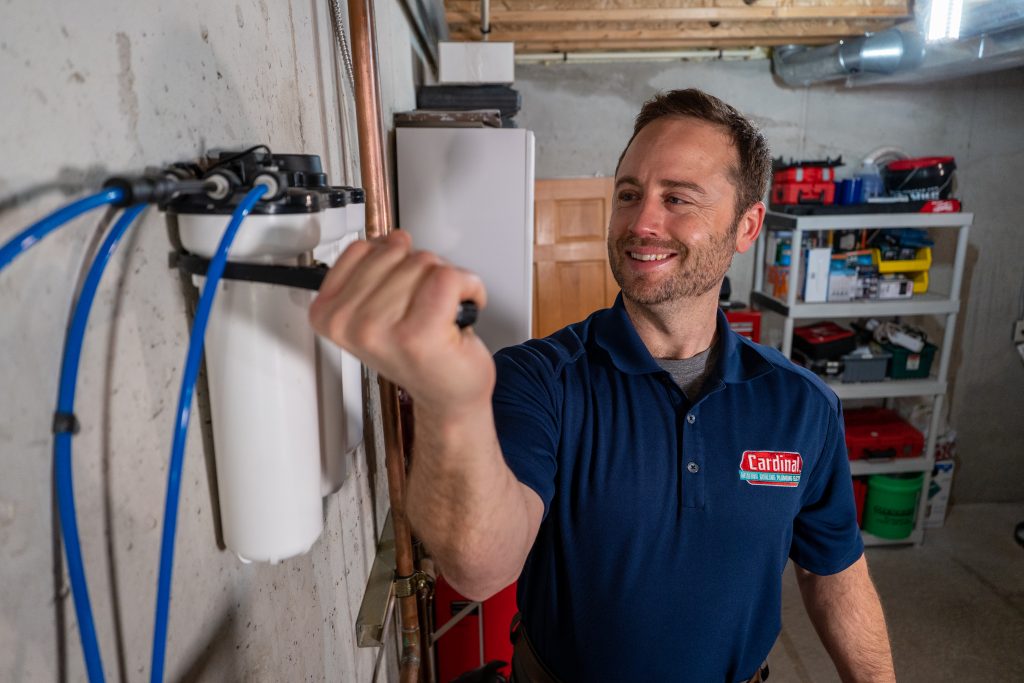
The system is usually installed under your kitchen sink, but it can be located in a basement or utility area if that works better for your home. It can feed water to a dedicated faucet on your counter, your refrigerator’s water dispenser, your ice maker, or all of the above. Turn on the faucet (or press the button on your fridge), and you get purified water on demand. That’s it. 

The Bottled Water Math

Let’s talk about what you’re actually spending on bottled water. 

If you’re buying bottled water regularly, the costs add up quickly. Those weekly trips to the store turn into a significant ongoing expense. 

An RO system produces purified water for pennies per gallon once it’s installed. The contrast is substantial. What you’re currently spending on bottles each month will cover the system installation over a short time, and then you’re just producing purified water indefinitely at a fraction of the cost. 

For a family that drinks, cooks with, and uses purified water daily, an RO system typically pays for itself within a year or two. After that, it’s just producing pure water for pennies per gallon, year after year. 

The other part of the equation is the hassle factor. No more cases to haul in from the car. No more running out at inconvenient times. No more figuring out where to store everything or taking bottles to recycling. 

Beyond Drinking Water

Here’s something that surprises most people when they first get an RO system: you start using it for everything that involves water. 

Coffee and tea taste noticeably better when you’re not starting with chlorinated tap water. The difference is especially obvious if you’re particular about your morning coffee. Using RO water also means no scale buildup in your coffee maker, which extends its life and reduces maintenance. 

Cooking water for pasta, rice, soup, anything that absorbs water as it cooks, benefits from starting with cleaner-tasting water. You’re not adding metallic or chemical flavors to your food. 

Ice cubes come out crystal clear instead of cloudy. If you’ve ever wondered why restaurant ice looks different from yours, it’s often because they’re using filtered water. 

Pet water bowls can be filled with the same quality water you’re drinking. If you wouldn’t drink it, why would you give it to your dog or cat? 

Washing produce under RO water means you’re not rinsing vegetables in the same water you were trying to avoid drinking. 

Bottled water only solves the drinking water part. An RO system handles all of it. 

What About the Environmental Side?

If you’re like most people, you’ve felt at least a twinge of guilt about the plastic bottles. The average family using bottled water exclusively goes through somewhere between 2,000 and 3,000 bottles per year. 

That’s not meant to make you feel bad. You were solving a real problem (water that didn’t taste great) with the most obvious solution (buying water that did). But once you have an RO system, that concern just goes away. No more plastic bottles to manage, recycle, or feel conflicted about. 

The practical benefit is that you’ve eliminated a recurring purchase and its associated waste. The environmental benefit is a bonus that comes along with the solution you needed anyway. 

How RO Compares to Other Filtration Options

You might be using a pitcher filter right now, or you’ve considered getting one. Pitcher filters do remove some things from water, primarily chlorine taste and odor. They’re inexpensive and better than nothing. 

But they have limitations. The filters need frequent replacement. They can’t remove dissolved solids or many other contaminants. And they only filter small amounts at a time, which means you’re constantly refilling and waiting. 

RO systems filter at a much higher level and produce larger quantities of purified water that stores in a small tank under your sink. When you need water, it’s there. No waiting, no planning ahead. 

The other common option is whole-home filtration systems. These filter all the water coming into your house, which is useful for protecting appliances and improving shower water. But they don’t achieve the same purity level as RO for drinking water. 

Many homeowners end up with both: whole-home filtration for general water quality throughout the house, and an RO system specifically for drinking and cooking water. But if you’re primarily concerned about what you’re drinking and cooking with, an under-sink RO system is the most direct solution. 

Installation and Maintenance

An RO system installation typically takes a few hours. A plumber connects the system to your cold water line, sets up the storage tank, and installs a dedicated faucet on your countertop or sink deck. If you want, the system can also feed your refrigerator’s water dispenser and ice maker. Once it’s in, it works automatically. 

Maintenance is minimal. The filters need changing every six to twelve months depending on your water usage and quality. 

The RO membrane itself typically lasts two to four years. Most people schedule annual service to handle filter changes and make sure everything’s working properly.  

You don’t need to do anything on a daily basis. The system automatically refills its storage tank as you use water, so there’s always purified water available when you turn on the faucet.

Frequently Asked Questions About RO Systems

“Will it remove healthy minerals from my water?” 

RO does remove minerals along with everything else. This is true. However, you get minerals primarily from food, not water. A balanced diet provides far more calcium, magnesium, and other minerals than drinking water ever could. 

“How do I know if I need one?” 

If you’re currently buying bottled water because you don’t like how your tap water tastes or smells, an RO system makes sense. If you’re spending a meaningful amount each month on bottled water, the economics work in your favor. If you care about water quality for cooking and not just drinking, RO covers more ground than bottled water ever could. 

“What’s involved in choosing a system?” 

Systems come in different sizes based on how much water your household uses daily. A family of four typically needs a larger capacity system than a couple or a single person. The main decision points are tank size and faucet style. 

A good installer will assess your water usage, look at your under-sink space, test your water quality if needed, and recommend a system that fits your situation. 

The Wisconsin Water Context

Wisconsin’s municipal water systems are generally safe and well-maintained. The water coming out of your tap meets federal safety standards. 

That said, Wisconsin has had its share of water quality concerns over the years. Milwaukee experienced a major cryptosporidium outbreak in 1993 that affected hundreds of thousands of people. More recently, communities across the state have dealt with PFAS contamination, lead pipe concerns, and agricultural runoff issues.  These events remind us that water quality isn’t something to take for granted, even in places with good infrastructure. 

Municipal water treatment does its job of making water safe to drink. But many homeowners prefer an extra layer of protection and better taste, which is where RO systems come in. 

But “safe” and “great tasting” aren’t the same thing. Municipal water treatment uses chlorine for disinfection, which you can often taste and smell. Depending on your local water source and the age of pipes in your neighborhood, you might also notice mineral content, metallic taste, or occasional sediment. 

None of this means your water is dangerous. It just means it might not taste the way you’d prefer. An RO system addresses the taste and clarity issues while maintaining the safety that municipal treatment provides. 

If you’re on a private well, the considerations are slightly different. Well water quality varies significantly based on location and geology. Some wells produce excellent water. Others have high mineral content, sulfur smell, or other issues. RO systems work with well water too, though you may need additional pre-filtration depending on what’s in your water. 

Working with Cardinal

If you’re interested in learning whether an RO system makes sense for your home, we can help you think through the decision. 

We’ve been installing RO systems in Dane County homes since 1984. We’re familiar with local water conditions, what systems work well in different situations, and how to match the installation to your actual needs rather than overselling capacity you won’t use. 

The process starts with a free consultation. We’ll talk about your water quality concerns, how much purified water your household would realistically use, and what your under-sink space can accommodate. We’ll answer your questions honestly, show you what’s involved, and give you a clear sense of what the investment looks like. 

If you decide to move forward, we handle the installation professionally and make sure you understand how to use the system and when maintenance will be needed. If you decide it’s not right for you, that’s fine too. Not every solution fits every situation, and we’d rather have you make the right choice than just make a sale. 

The goal is simply to help you get water you feel good about, without the ongoing expense and hassle of buying it in bottles. 

Ready to stop buying bottled water? Schedule a free consultation to learn if an RO system is right for your home. 

Schedule Service
Woman looking frustrated in a messy kitchen filled with dirty dishes and food remnants, illustrating the challenges of holiday cooking and the importance of kitchen maintenance during busy times.

Is Your Sink Ready?

Thanksgiving is a full-contact sport. Four days of non-stop cooking, cleaning, and proving to your family that you’vegot everything under control. Twenty pounds of turkey. Mountains of sides. Endless dishes. And your kitchen? It’sabout to face its annual final exam. 

Here’sthe thing most homeowners don’trealize until it’stoo late: your kitchen works harder during Thanksgiving week than it does during the entire rest of the year combined.

The average garbage disposal handles about two pounds of waste per week. Thanksgiving week? Try twenty. 

The Thanksgiving Morning Nightmare

Woman sitting on kitchen floor, looking stressed and checking the time, surrounded by cleaning supplies, reflecting Thanksgiving kitchen chaos and urgency.

Picture this: It’s 9 AM on Thanksgiving. You’re trimming green beans for sixteen people. Vegetable trimmings go down the disposal. It grinds for a second, then makes a horrible grinding noise and stops dead. Water backs up into the sink. Your mother-in-law walks in and asks if you “need help.” 

You try the plumber. Voicemail. They’re closed for the holiday. Now you’re on your knees with a bucket, and guests arrive in four hours. 

The Thanksgiving Kitchen Stress Test: 5 Warning Signs

Walk through this quick checklist right now. If any of these soundfamiliar, you’vegot a problem waiting to happen: 

Your garbage disposal sounds different than it used to – That grinding, struggling sound? That’snot normal. It’sa cry for help. When twenty pounds of turkey scraps hit that disposal on Thanksgiving, there’sa chance it’sgoing to quit. 

Woman struggling with a leaking kitchen faucet, water splashing from the tap, highlighting plumbing issues during Thanksgiving preparations.

Your kitchen faucet is loose or leaky – A loose faucet handle or a persistent drip might seem like a minor annoyance now. But when you’re filling pot after pot, washing dish after dish, that loose handle becomes a wobbly disaster and that drip becomes a constant distraction. 

Your disposal takes longer to clear than it used to – If you’re standing there running water, waiting for it to finish grinding, that’s a red flag. A healthy disposal clears quickly. A dying one makes you wait. And on Thanksgiving? You don’t have time to wait. 

Your sink drains slowly – Slow drainage means something’s building up. And when Thanksgiving hits with its tsunami of food waste and dishwater, that slow drain becomes no drain. 

Fix It Now, Thank Yourself Later

Here’swhat people get wrong. They think of appliance replacement as an expense. It’snot. It’sinsurance against disaster, embarrassment, and a ruined holiday. 

Right now, we’re offering our Thanksgiving Kitchen Prep Special because we understand that November is when smart homeowners prepare: 

Sale Ends 12/5/2025

 off garbage disposal,  off faucet fixtures, 0 off both together promotion for Thanksgiving kitchen prep special by Cardinal HVAC.

While We're There Anyway...

Here’s the truth about kitchen fixtures: if one is failing, the other isn’t far behind. They’ve been through the same years of use, the same daily wear and tear. 

Our technicians are already going to be under your sink. One appointment. One invoice. And with the combo deal, you save $150 while eliminating two potential disaster points instead of just one. 

Ready to prep your kitchen for Thanksgiving?Take advantage of our Thanksgiving Kitchen Prep Special and save up to $150when you replace both your disposal and faucet. Sale ends 12/5/2025

Your future self, the one hosting a stress-free Thanksgiving, will thank you.